 
|
|


Feature Article
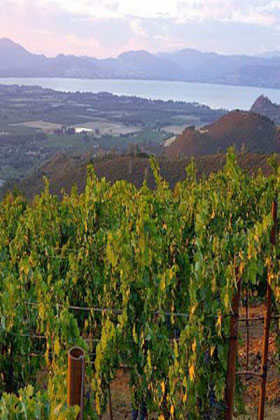
Particularly suited to red grapes but also suitable for pungent Sauvignon Blanc and Viognier, the Red Hills offers great vistas of
Lake County's Clear Lake.
An Up and Coming AVA in
an Up and Coming AVA
California’s Red Hills AVA (located within the larger Lake County AVA) has great vistas of Clear Lake and, of course, the undulating hills. But it also has the right terroir for a variety of in-demand varietals that until recently were sold to wineries outside the county. That’s all changing now as our reporter discovered on a visit to the region.
by
Harry Haff
May 13, 2008
 he Red Hills AVA is an area of rolling hills located within the Lake County AVA on the southwestern shore of Clear Lake, the largest natural lake in California, and reportedly the oldest lake in the United States. Red Hills farms around 3,000 acres of grapes with a potential for 3-5,000 more acres.
A product of its resident (but long inactive) volcano, Mount Konocti, Red Hills’ soils and sub-soils are 90 percent volcanic in origin and date from 600,000 years to 14-16,000 years ago. There are three main types of volcanic soil in Red Hills: Glenview-Bottlerock-Arrowhead; Konocti-Benridge; Collayomi-Aiken. Topsoils tend to be well drained, shallow and mineral rich, a combination which provides excellent ground for Cabernet Sauvignon and Sauvignon Blanc. The area is rich in obsidian, gravel, basalt and pumice.
Variations in vineyards throughout the area can be dramatic. Roumiguiere Vineyards is located on an out-cropping of bottlerock, i.e. obsidian. Driving up to the vineyard, you are surrounded by deep black obsidian glass that sparkles in the sunlight like a million tiny lights. John Roumiguiere, the vineyard co-owner, commented that this rock is tougher than steel, incredibly sharp and can shred plow blades without working up a sweat. The obsidian also lends a unique quality to the Cabernet grapes, producing some fine-grained tannins. The top-soil in this outcropping is almost non-existent and the vines need to work to root themselves in the obsidian sub-soil.
At Shannon Ridge Vineyards, just a few minutes down the road and on the other side of Route 29 going towards the lake, a layer of red loam and gravel overlays a smattering of pumice with a
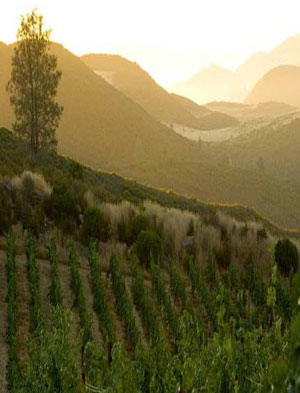
At Red Hills' higher elevation, sunlight is more intense than on the valley floor. The vines also receive longer exposure because of the aspect of the slopes combined with the elevation.
At Snows Lake Vineyard, the vineyard is a volcanic cap that sits on a reservoir of 6-7,000 acre-feet of water. The red soils here are the product of volcanic vent activity from the Sonoma Period, as recently as 14-16,000 years ago, and have a deep red color that almost looks like the red wine produced from the grapes.
The climate and weather in Red hills are the products of a unique set of circumstances that, along with the soils, provide ideal conditions for wine grapes, black grapes in particular.
Clear Lake itself provides temperature moderation to the vineyards nearby and helps create air movement. The lake surface is 1,300 feet, with vineyards ranging from 1,400 to more than 3,000 feet in elevation, making the entire area ideally situated for healthy grapes. For example, with the vineyard above the temperature inversion layer at Snows Lake Vineyard, the elevation gives access to the coastal breezes but has the vines above the ground fog level.
The Soil is Red, The Grapes and Red and White
Elevation, combined with the slope of the land, creates afternoon breezes that allow the vines to cool down after the midday heat. Diurnal temperature differences are as much as 50 degrees, which is ideal for ripening fruit while maintaining acid levels. The cooling at night allows the grapes more hang time, which in turn develops more complex flavors.At Red Hills higher elevation, sunlight is more intense than on the valley floor. Anyone who skis in the Rockies knows that it is easy to get a serious tan in the middle of the winter because the light is so intense. The vines also receive longer
 exposure because of the aspect of the slopes combined with the elevation. With one degree of slope roughly equivalent to one degree of latitude, the effect is almost like having your vines planted further south to aid ripening, but the colder night air and longer exposure to sunlight create wonderfully complex aromas and flavors.
The temperature difference between the top and bottom of the slope is so pronounced that harvesting often takes place in lateral bands rather than starting at one end of the row and picking through to the other end. This is the case at both Roumiguiere Vineyards and Snows Lake Vineyards. Lower elevation grapes bud later and mature slower than those at higher elevations.
Rainfall is mostly in the winter at about 30-40 inches, with the east end of the Red Hills being drier than the west. For most vineyards, drip irrigation is needed but it is also tightly monitored so that the berries have a high level of flavor intensity. Fungal diseases and insect pests are not a major problem because of such good air circulation and cold winters.
These unique factors, coupled with land prices lower per acre than in Napa and Sonoma, mean top quality grapes can be produced for more reasonable prices than in other regions. Clay Shannon says all these factors create excellent quality grapes at better prices than other areas. With a goal of producing wines in the range of $20-$25, Mr. Shannon believes he can supply wines that “over-deliver on expectations and value”, yet are intended “for normal people”.
As might be surmised, conditions are well suited for red varietals: Cabernet Sauvignon, Cabernet Franc, Syrah, Zinfandel, Petite Syrah, Malbec, Petit Verdot and Sangiovese. But much of the reputation of the Red Hills is based on Sauvignon Blanc. The soils and climate provide a fertile environment for developing wonderfully complex flavor profiles for this varietal. The escalating reputation for Sauvignon Blanc wines is helping to focus attention on this unique area. There are also some plantings of Rhone varietal whites, which should do well along with the reds.
Red Hills Makes its Mark – on Wine Labels
Wine buyers should notice increasing labeling of Red Hills AVA as a source for grapes by vintners located in other areas of the state. As many vineyards here do not produce wine but grow grapes on contract, labeling for the appellation will be more common with the increasing reputation of the area. A number of growers told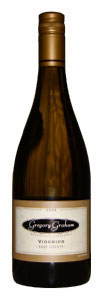 me that most contracts are for 100 percent of harvest crop contracted several years in advance. The lowest number I came across was 96 percent. That’s remarkable, considering that the AVA dates only from the late 1990s and that many vineyards are producing grapes on vines less than 10 years of age.
Growers who also vinify are seeing increased recognition for, and distribution of, their wines across the country. Based on the young age of most of the vineyards, this recognition of quality and expression of typicity
 READER FEEDBACK: To post your comments on this story,